Hedge Trimming in Forest Gate

Hedge trimming in Forest Gate is about shaping living boundaries so they look neat, stay healthy and suit the space they enclose. We provide a straightforward hedge trimming service for front gardens, back gardens and boundary lines, with attention to the finish, the plant type and the level of cut required. The aim is not simply to shorten growth, but to maintain a balanced line, encourage denser growth where appropriate and leave the hedge looking tidy rather than hacked back.
Different hedges need different handling. Some are best lightly clipped to preserve a crisp outline, while others need a more considered reduction after a season of vigorous growth. We work with both routine maintenance and more substantial reshaping, helping homeowners and landlords keep hedging under control without losing the structure that makes it useful. Careful trimming matters because it helps reduce uneven growth and keeps the hedge functioning as a screen, border or feature.
If you need hedge work in Forest Gate, take a look through the pages below for more detail on related garden services, then request a quotation when you are ready. Clear access information and a few photographs can help us understand the size and condition of the job, but the main point is to keep the request simple and accurate. For a tidy result, the finish should match the hedge’s purpose, whether that is privacy, shape or general garden presentation.
Routine hedge cutting for maintained gardens
Routine hedge cutting is the core of many visits, especially where the growth stays active through the season and needs regular shaping. This work is usually about maintaining height, straightening the outer face and keeping the top level where possible. A well-kept hedge can make a garden feel more ordered without appearing overworked, and the right cut should reflect the species and the desired form rather than forcing every hedge into the same shape.
Our hedge trimming service is suited to hedges that need periodic attention to stop them becoming untidy or bulky. Depending on the hedge and its position, we may focus on the sides, the top or all visible faces so that the whole line reads cleanly from the street or garden. Where a hedge has become uneven, the work can include correcting high spots and restoring a consistent profile across longer runs.
What a clean trim usually involves
A sensible trimming visit often begins with assessing the hedge’s current shape, the accessible sides and any awkward sections near paths, fences or outbuildings. The cut then needs to follow the existing line while removing the growth that is making the hedge look shaggy or out of proportion. If you are arranging hedge work alongside other garden maintenance, a broader plan can help keep the result consistent and reduce the need for repeated correction later on. Good hedge care is steady, not rushed.
Shaping, reduction and seasonal control

Some hedges need more than a light tidy. When growth has pushed beyond its intended size, a reduction or more deliberate reshaping may be the better option. This kind of work should be handled with care so that the hedge remains balanced and does not end up with an uneven outline that takes a long time to recover. It is also important to think about timing and the species involved, because trimming too hard at the wrong moment can leave the hedge looking thin or stressed.
If a hedge has outgrown its space, a careful cutback can restore light, space and a better boundary line. The work may involve removing long extensions, re-establishing a manageable width or bringing the top back to a sensible level. Our garden maintenance page covers the broader upkeep that often sits alongside hedge work, including regular seasonal attention where several parts of the garden need a coordinated approach.
For customers comparing options, it helps to decide whether the hedge should be refined or substantially reduced. Refining keeps the existing shape and simply makes it sharper, while reduction changes the overall size and can alter how much privacy or screening the hedge provides. A clear conversation about the goal helps avoid cutting more than is needed and keeps the result aligned with the garden’s use.
Supporting hedge work with wider garden care
Hedges rarely sit in isolation. Their edges meet lawns, borders, fences, paths and sometimes sheds or driveways, which means the trim often needs to be considered as part of the garden as a whole. When the surrounding space is also being maintained, it can be sensible to coordinate the work so that the hedge line, lawn edges and visible boundaries all look coherent. That approach is particularly useful where a front garden needs a tidy, presentable finish.
Our lawn mowing service can be paired with hedge work when the main aim is to restore order across the visible parts of the garden. A freshly trimmed hedge and a level cut lawn usually complement each other, especially where the garden is seen from the pavement or shared access. If you are planning several tasks together, think about which elements define the overall view and which ones simply need practical control.
For more extensive outdoor improvement, some customers also consider landscape gardening where the hedge is one part of a wider redesign or reorganisation. That is different from routine trimming, because the hedge may be adjusted to fit new planting, new boundaries or a changed garden layout. In simple terms, trimming keeps the current idea in shape, while landscaping may reshape the setting around it.
Hedges near fences, paths and boundaries
Hedges that run alongside boundaries need a tidy, controlled finish because they affect both appearance and practical use of the space. A hedge overhanging a path or encroaching on a fence line can make a garden feel cramped, while a clean cut restores clearance and a more deliberate outline. The work has to respect the hedge’s natural growth habit as well as the position of nearby structures, especially where access is tighter.
In some gardens, the hedge forms part of a boundary arrangement with fencing, gates or shared edges. The trimming process should be precise enough to maintain the intended line without exposing too much of the underlying structure. Our decking services page may be useful if your garden includes a decked area that sits close to planted boundaries and you are looking at a broader refresh. The point is to keep every visible element in proportion rather than treating each feature separately.
Where access is limited, preparation matters. Moving lightweight items away from the hedge, clearing the immediate working area and identifying any fragile plants nearby all make the job easier and cleaner. If you are asking for a quotation, a brief description of the hedge length and the garden layout is usually enough to begin with. A good enquiry saves time because it lets us understand the practical shape of the work before any visit is arranged.
When hedge trimming meets bigger garden clearance

Some hedge jobs sit alongside broader tidying, especially where cuttings, fallen leaves and general garden debris have built up. In those cases it can be useful to think about the hedge and the surrounding waste together, rather than as separate small tasks. A cleaner site makes the finished hedge stand out more clearly, and it also helps reveal whether the boundary line or shape needs any final adjustment once the immediate clutter has gone.
For gardens needing more than trimming alone, our garden clearance page explains the kind of wider tidy-up that may be appropriate when overgrowth, cut vegetation or assorted garden material needs removing at the same time. That does not mean every hedge visit requires clearance, but it can be a practical addition where the space has become crowded or difficult to use. Keeping the work grouped sensibly often makes the final result more satisfying.
Useful details for a quotation are usually straightforward: the hedge location, approximate length, whether both sides need cutting, and whether access is from a garden, side passage or front boundary. If there are any awkward corners or nearby plants you want protected, mention them too. Two short photos are often enough to show the height and density. For the clearest response, include what you want to keep as well as what you want cut.
Trimming before or after planting changes
Hedge trimming can be part of a garden that is gradually changing. A hedge may need to be kept under control while other areas are replanted, cleared or restructured, and the order of work can affect the final result. If the hedge is being retained as a permanent boundary, it may need regular shaping to keep it compatible with new planting nearby. If the hedge is being replaced or partially altered, trimming can be used to manage the transition.
Our landscaping page is relevant when the hedge is only one element in a larger garden layout and there is a plan to alter the feel, structure or use of the outdoor area. In practical terms, this might mean adjusting hedge lines to open a view, keep a path clear or make room for other features. A careful approach helps ensure the hedge supports the design rather than fighting against it.
Where a hedge has become the main divider between different parts of a garden, it is worth considering how much privacy and screening you need after trimming. A lighter cut may be enough where the hedge is already dense, while a more substantial reduction can change how enclosed the space feels. Balancing those choices is part of getting the service right, and it is why a measured cut is better than a purely aggressive one.
About Forest Gate
Forest Gate is a district in east London within the London Borough of Newham, known historically as a settlement beside the route marked by a former gate on the edge of Epping Forest. The area developed rapidly in the nineteenth century after the arrival of the railway, with housing spreading from the older core around Romford Road and Stratford toward the surrounding streets. Much of the built environment reflects that Victorian and Edwardian growth, with terraced houses, shops and community buildings forming the everyday character of the district. Forest Gate station, on the Great Eastern line, has long been part of the area’s identity, linking it with central London and the wider east of the city. The locality also sits close to larger green and sporting landscapes, including Wanstead Flats on the western edge of Epping Forest, which provides open grassland and a well-used public space. Cultural life in Forest Gate is marked by a mix of local businesses, independent cafés, places of worship and community groups, while the street pattern still shows the layered development of a suburb that expanded around transport connections. As with many east London districts, the area combines residential streets with busy corridors of movement, older commercial frontages and a patchwork of public and private green space. That mix gives Forest Gate a varied urban texture, with quiet side roads only a short distance from active main routes and larger open areas.
Choosing the right level of hedge care
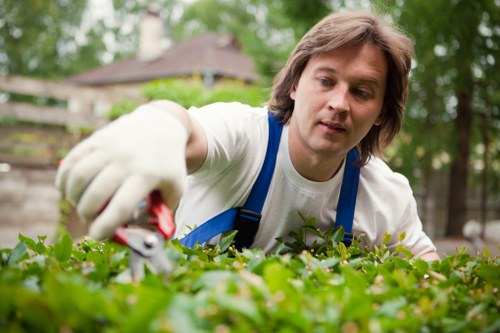
Not every hedge needs the same kind of attention. Some are best kept to a strict line, while others look better with a softer finish that follows the plant’s natural form. The right choice depends on how the hedge functions in the garden, how fast it grows and how much space it has to develop. A hedge close to a path or entrance usually benefits from clear edges, whereas a taller privacy hedge may need a finish that preserves thickness and coverage.
Our pricing and quotes page is useful if you want to understand how a quotation is normally prepared for hedge work. The factors that influence the price are often practical rather than decorative: hedge length, height, density, access, whether waste needs collecting and whether the work is a light trim or a larger reduction. Being precise about those points helps keep the quotation relevant to the actual job.
There is also a point at which trimming becomes part of ongoing garden rhythm rather than a one-off correction. A hedge that is checked regularly is usually simpler to maintain than one left for a long period and then cut back sharply. If you prefer a steadier approach, it is often better to keep the hedge within its desired profile throughout the growing season. Consistency is usually kinder than correction.
Making an enquiry and arranging the work
When you are ready to request a quotation, the simplest approach is to say what the hedge is doing for the garden and what result you want from the trim. If you are unsure whether a light tidy, a shape-up or a reduction is more appropriate, describe the hedge’s current condition and the outcome you are aiming for. That gives enough context for a sensible response without needing a long explanation.
Our contact us page is the place to send your request if you would like to move ahead. You can keep the message brief and still be helpful: mention the location in Forest Gate, the hedge type if you know it, and whether the work is just one side, both sides or the top as well. If waste removal matters to you, say so plainly. A clear request makes it easier to provide the right quotation first time.
We also recommend checking the hedge at a moment when it is easy to see all sides and the surrounding access points. That makes it simpler to judge the length, height and any irregular sections. If you are comparing options for a garden refresh, now is a good time to decide whether hedge trimming should be scheduled on its own or alongside other outdoor maintenance. Please get in touch when you are ready for a quotation.
Related garden services that can sit alongside hedge work

Some customers prefer to organise hedge trimming together with other useful outdoor tasks so the garden reaches a finished state in one planned round of work. That may include mowing, clearance or broader upkeep, depending on what the space needs. The advantage of looking at the garden as a whole is that the hedge can be cut in a way that suits the rest of the layout, rather than being managed as an isolated feature. That often gives a cleaner final appearance.
Our services overview is a simple starting point if you want to see how the different garden services relate to each other. It can be helpful when you are deciding whether your hedge work stands alone or forms part of a wider maintenance plan. If you are weighing up several pages, choose the one that best matches the actual job rather than the biggest-sounding option. Matching the service to the task keeps the quotation and the outcome aligned.
For a final step, ask for a quotation with the practical details that matter most and keep the request focused on the hedge itself. If you already know the garden needs some additional tidy-up work, mention that too. The best results usually come from a clear, direct enquiry and a service plan that reflects the shape of the garden. Request your quotation when you are ready.